14 Corporate Interview Outfits for Women That Read Serious Without Reading Stiff
Fourteen corporate interview outfits for women calibrated for law firms, finance and consulting. Each look meets a business-professional floor without feeling rigid.
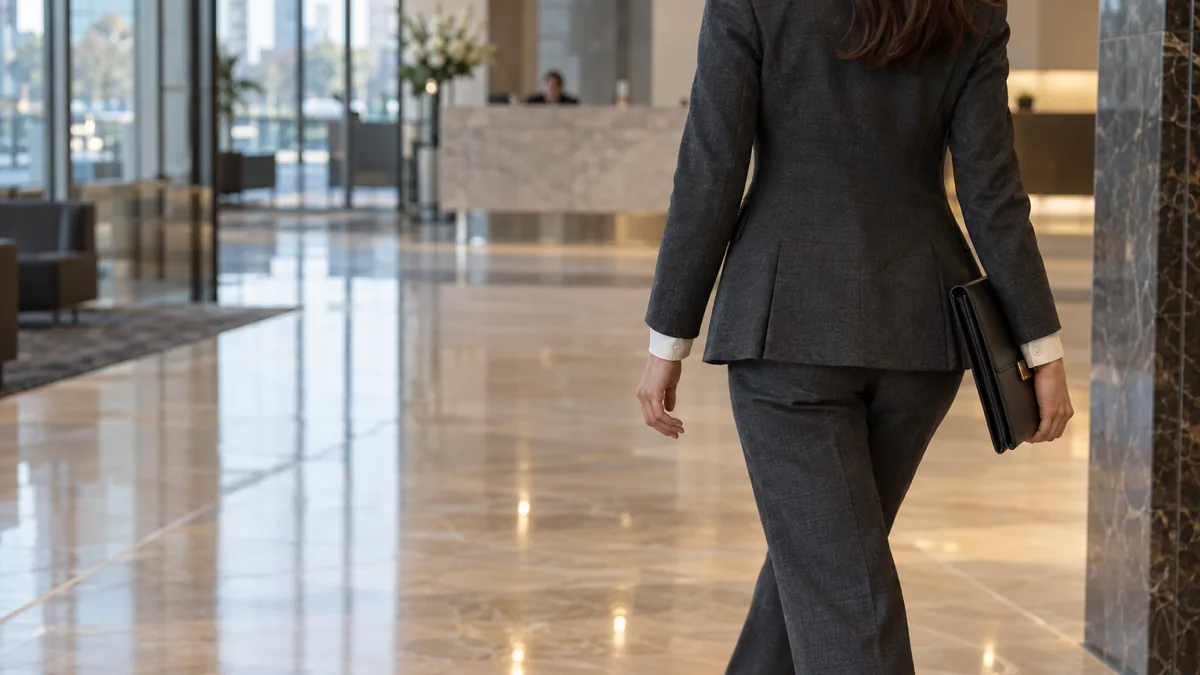
Working out an outfit for tomorrow? Save this page. It is easier to skim the night before than to remember.
At a glance
Works
- A single-breasted charcoal or navy suit with a silk or cotton blouse, because it meets virtually every corporate dress code without needing to guess
- Closed-toe pumps or pointed-toe flats in a neutral colour, because they disappear into the outfit instead of competing with it
- A structured leather bag or portfolio with no visible logos, because the bag is the one thing you carry into the room and it should not be the loudest object there
Depends
- A jewel-tone blouse under a dark suit, which works when you want to introduce one deliberate colour but reads too bold in the most conservative law firms
- A midi skirt instead of a knee-length pencil skirt, which suits conservative corporate settings where modesty matters but can read dowdy if the proportions are off
- Pointed-toe flats instead of pumps, which are accepted at most corporate offices now but still read slightly less formal where heels are the visible norm in the senior ranks
Skip
- Open-toe shoes of any kind in a first-round corporate interview, because most business-professional dress codes explicitly exclude them
- A bold pattern that draws attention before you speak, because the outfit should support you in the room, not enter it ahead of you
- Visible branding on any piece, because logos shift the focus from your judgement to someone else's marketing
A corporate interview is not the place to express range. It is the place to show you understand the room you are trying to enter.
These fourteen outfits are calibrated for business professional settings: law firms, banks, consulting firms, Fortune 500 headquarters.
If the company has a written dress code, it outranks anything here.
1. The Charcoal Pantsuit With a Silk Blouse
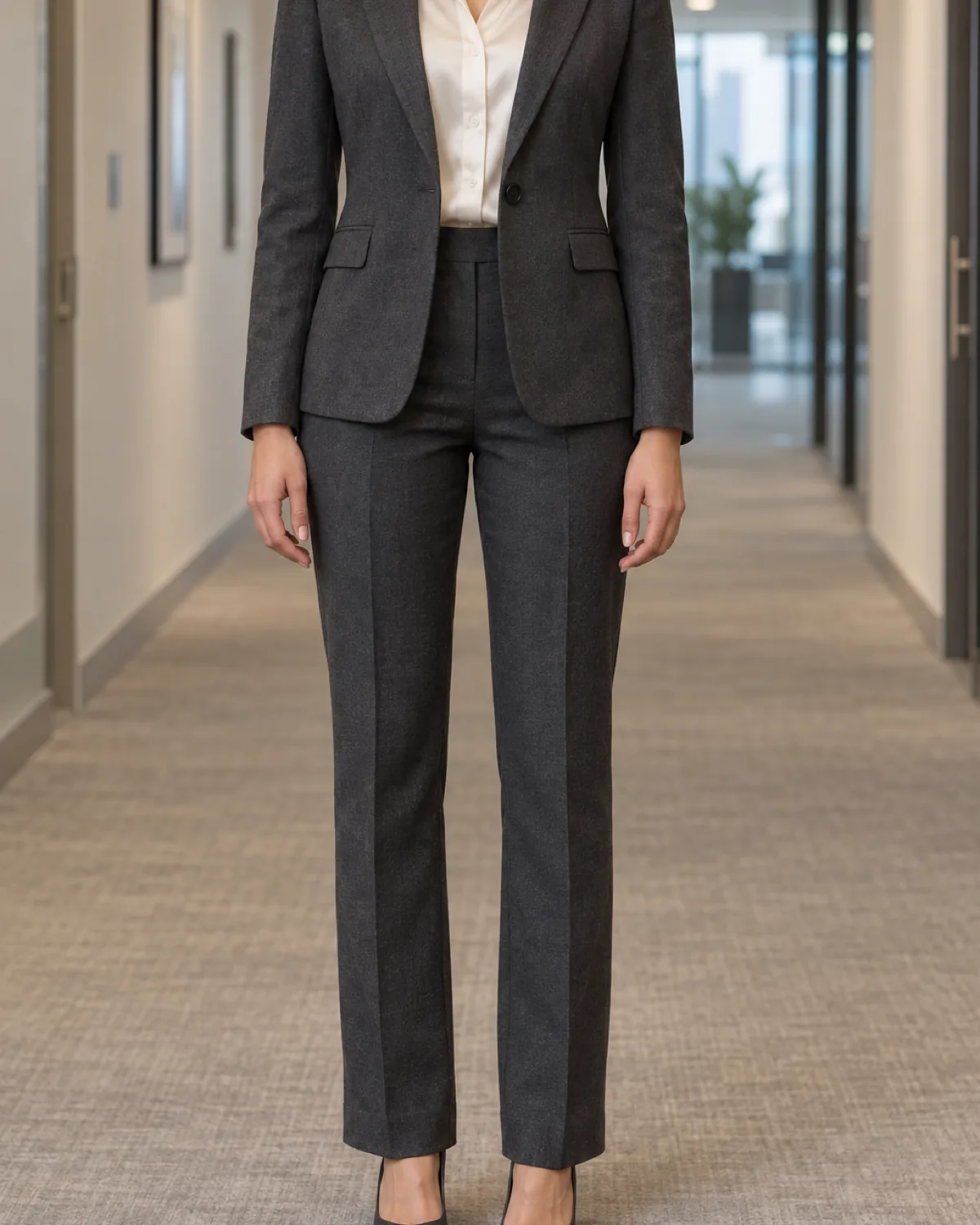
The safest outfit on this list. A single-breasted charcoal wool suit with a cream silk blouse reads as preparation without personality overreach. The blouse collar sitting over the blazer lapels softens the suit without competing with it, and charcoal is easier to match across skin tones than black.
- Choose a single-breasted jacket with one or two buttons rather than double-breasted, which reads more fashion-forward than most corporate interviewers expect
- Keep the blouse in cream, white or very pale blue so the suit does the talking
- Make sure the trouser break is clean, just touching the top of the shoe without bunching
- This is your default if you have no information about the dress code
2. Navy Sheath Dress Under a Matching Blazer
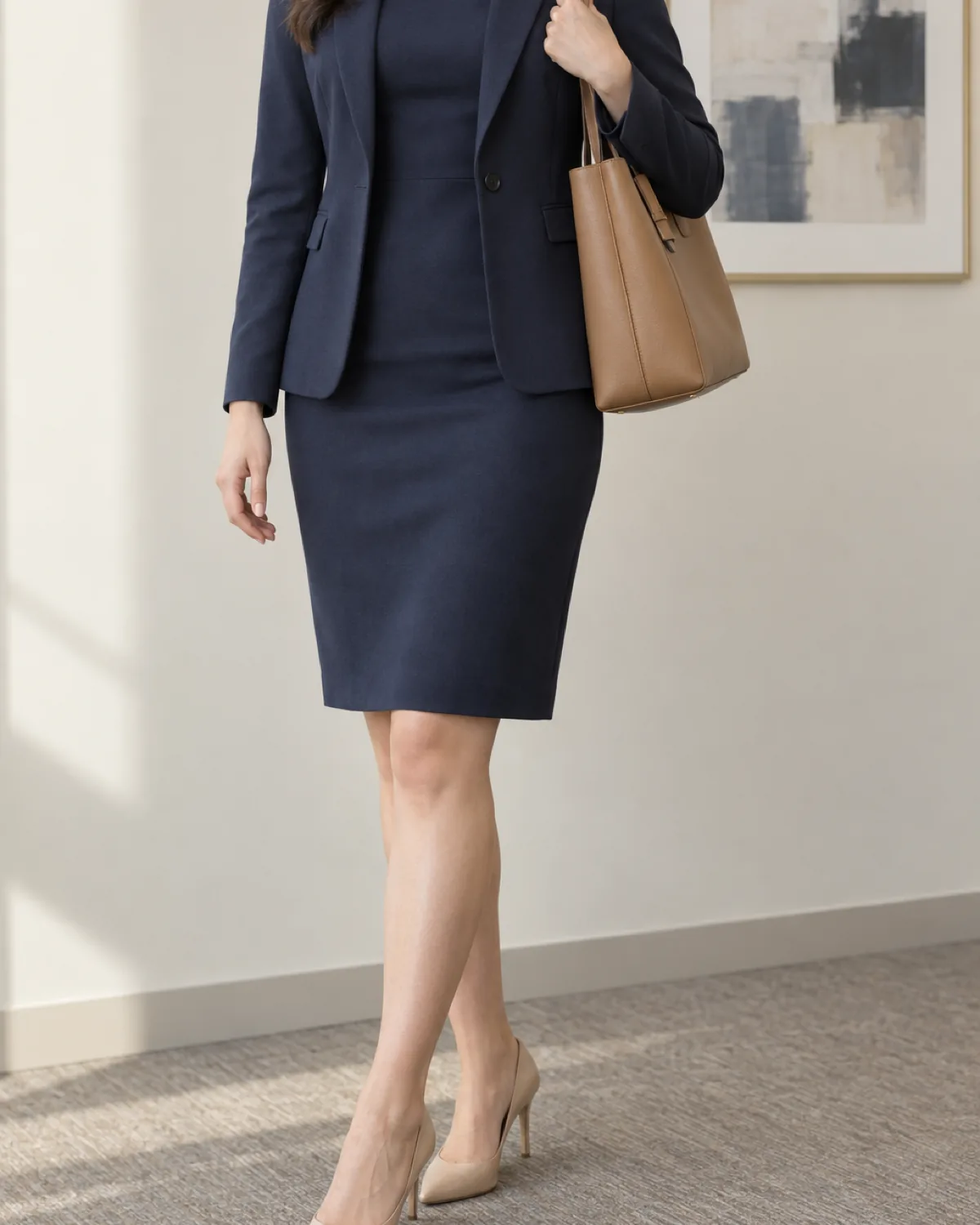
A matched set that reads as one decision. The sheath dress removes the tuck-in question and the blazer adds structure. Navy over navy reads quieter than black and avoids the flight-attendant association that a black sheath-plus-blazer can trigger in some rooms.
- The dress hemline should hit at or just below the knee so it stays in place when you sit down
- A round or boat neckline works best because it does not compete with the blazer lapels
- The blazer and dress should match in colour and fabric weight so they look intentional, not mismatched
- Carry a bag in a contrasting neutral like tan or cognac to break the solid navy
3. Pencil Skirt, Tucked Shell Top and Structured Pumps
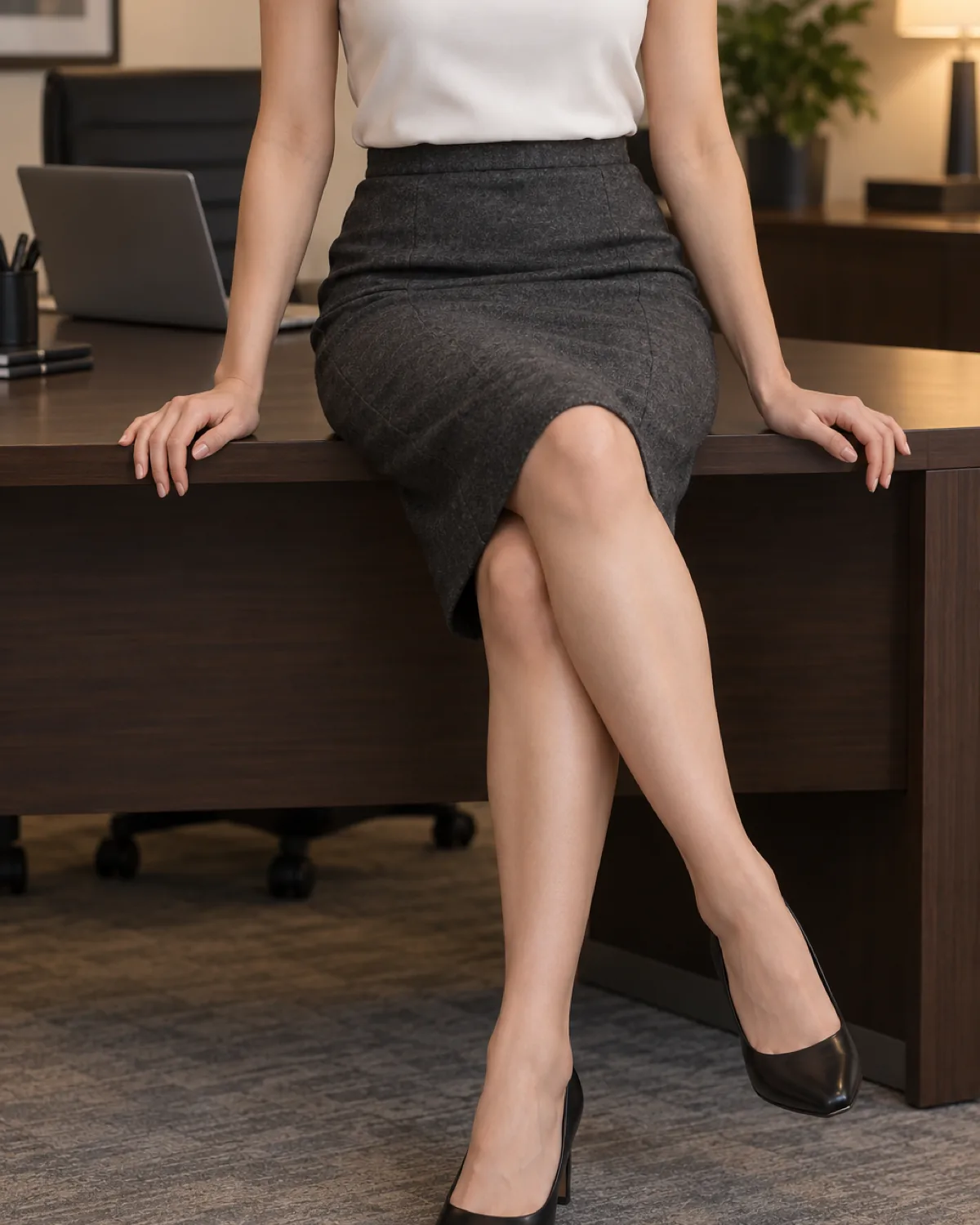
The skirt-based alternative for offices where skirts are common in the senior ranks. A crew-neck shell has no collar to compete with a blazer if you add one, and the pencil skirt's knee-length hem is the safest skirt length in corporate settings.
- The skirt should hit at the knee or just below, and it should stay there when you sit and cross your legs
- A shell top in white or cream gives you the option to add a blazer over it without collar conflict
- Test the sit-down: if the skirt rides up or the waistband digs in, the fit is wrong
- Black or dark charcoal pumps with a moderate heel height anchor the bottom half
4. Wide-Leg Tailored Trousers With a Fitted Blazer
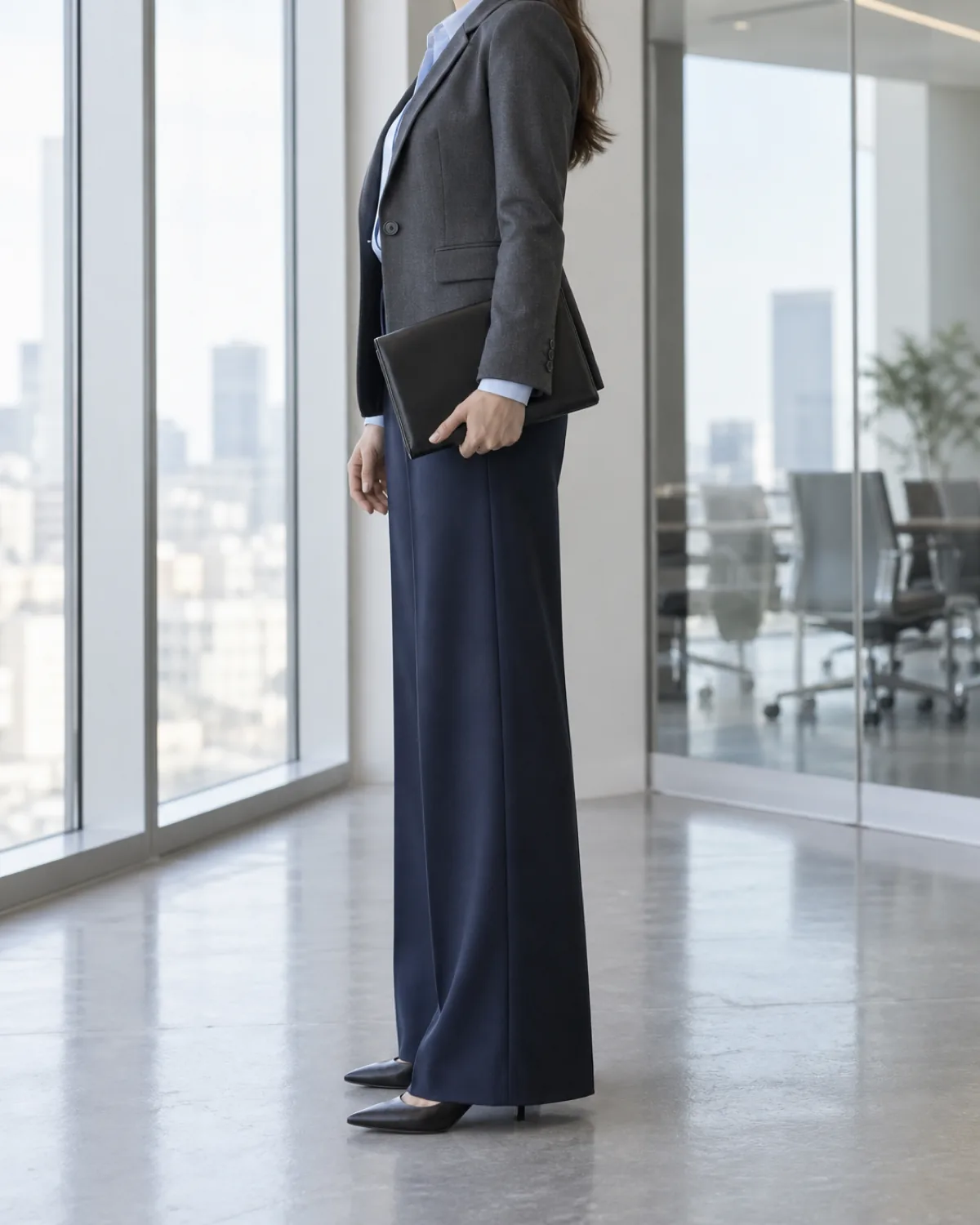
A modern silhouette that still reads conservative. The wide leg balances a fitted blazer without looking oversized. The side profile of this outfit is where it earns its place: the drape of the trouser reads as deliberate tailoring, not as borrowed clothes.
- Choose a full-length trouser that breaks slightly over the shoe because a cropped wide-leg reads too casual for most corporate interviews
- The blazer should be fitted, not boxy, so the outfit has a visible waist and does not look like separates that happened to match
- A pale blue or white blouse tucked in with the collar inside the blazer lapels keeps the proportions clean
- This combination works especially well in consulting and finance where trouser suits are the norm but you want to signal that you are not defaulting to the standard charcoal straight-leg
Where to start
Find your situation, skip ahead
You are interviewing at a law firm, bank or consulting firm with a known business-professional dress code
Start with ideas 1, 2 or 6. These are matched or near-matched suiting combinations that meet the highest corporate floor without over-thinking.
01 The Charcoal Pantsuit With a Silk Blouse02 Navy Sheath Dress Under a Matching Blazer06 The Black Trouser Suit With a Jewel-Tone Blouse
You are interviewing at a Fortune 500 company and have no insider information about the dress code
Ideas 3, 4 and 8 give you conservative options that do not read as if you dressed for court. When in doubt, dress one level above what you expect.
03 Pencil Skirt, Tucked Shell Top and Structured Pumps04 Wide-Leg Tailored Trousers With a Fitted Blazer08 Camel Trousers, Navy Blazer and a White Shirt
Your interview is at a corporate office that leans slightly creative, like a media company or architecture firm
Ideas 12 and 14 offer structured but less traditional silhouettes. A shift dress or collarless blazer still reads serious in these rooms.
12 Shift Dress With a Structured Cardigan14 Collarless Blazer Over a Column Dress
5. A-Line Skirt With a Fitted Knit and Pumps
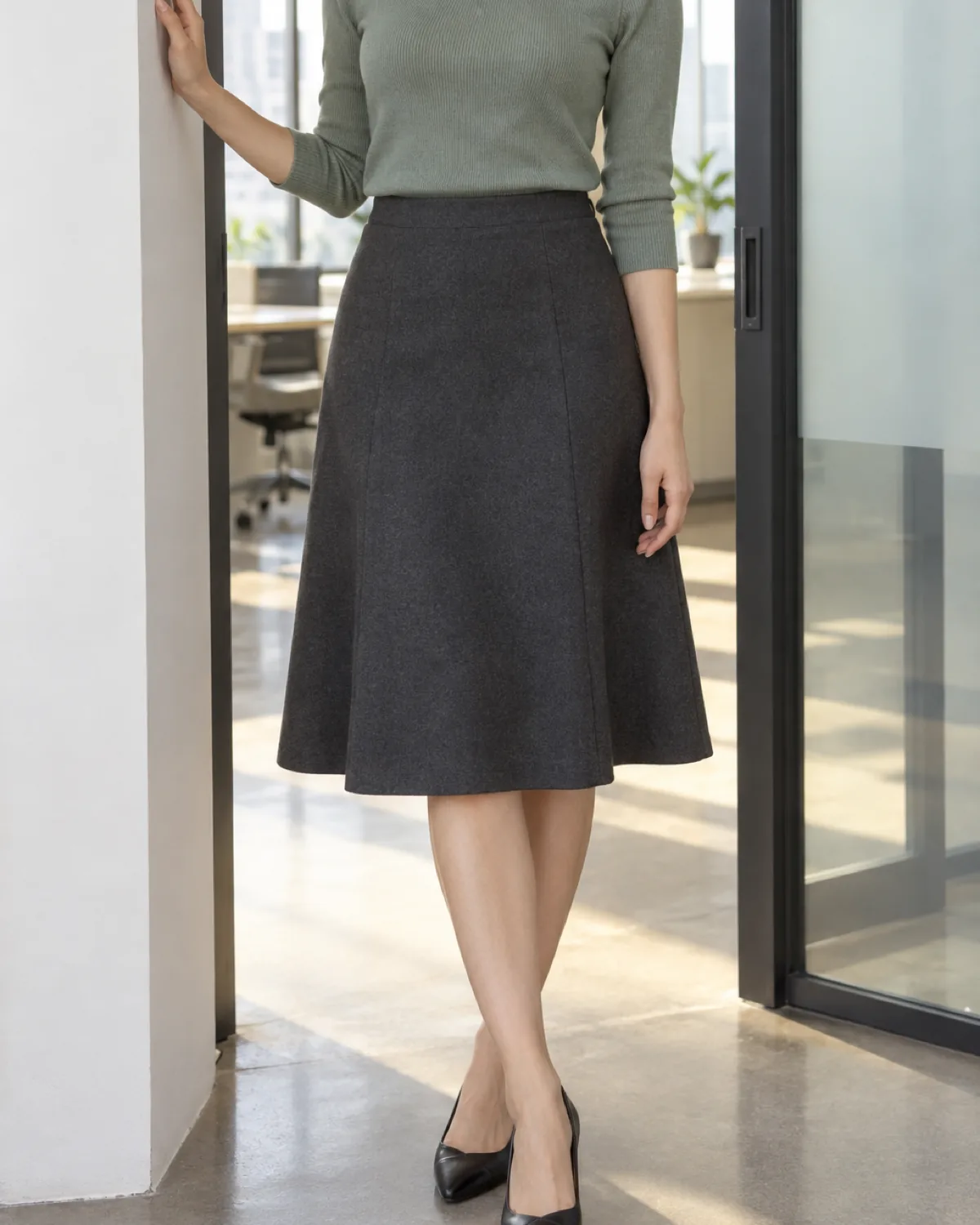
For settings where the walk between lobby and conference room is long or when pumps with a higher heel feel over-committed. The A-line skirt is more forgiving than a pencil skirt and the pointed-toe pump keeps the line sharp. The fitted knit holds the formality because it is fine-gauge, not chunky.
- The knit should be fine-gauge merino or silk-blend, smooth enough to read as knitwear rather than casual
- A boat neckline or crew neck works best because it sits flat under a blazer if you decide to layer
- Keep the skirt in the same neutral family as the knit or one shade darker so the outfit reads as coordinated
- Sage, slate or dusty rose are safe knit colours for corporate settings because they register as deliberate without being loud
6. The Black Trouser Suit With a Jewel-Tone Blouse
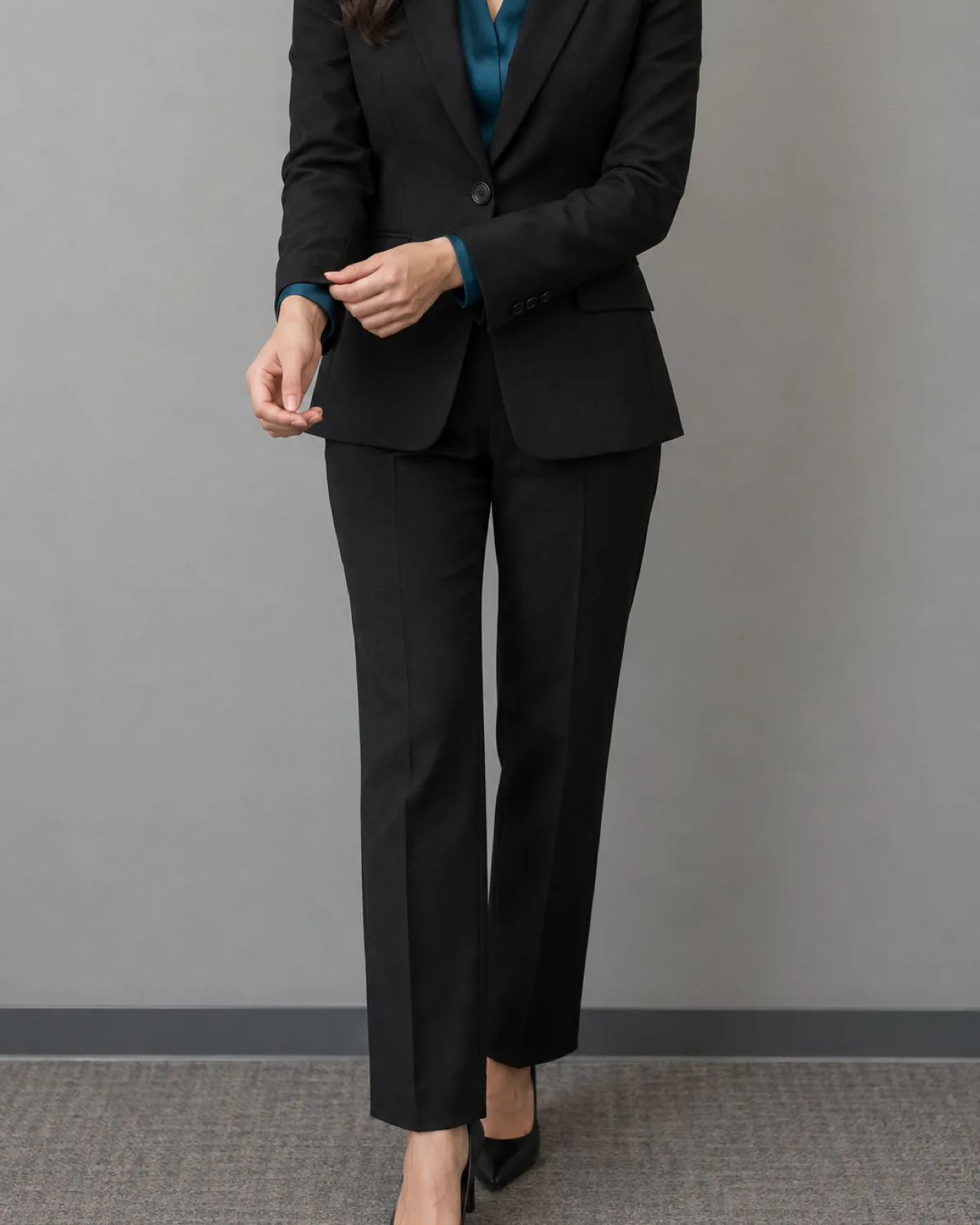
The same structure as idea 1 but with one deliberate colour choice. A muted teal blouse under a black suit introduces personality in the one place corporate dress codes leave room for it: the layer closest to the face.
- Muted teal, dark burgundy or deep plum all work because they are jewel tones, not brights
- The blouse should only be visible at the V of the blazer and at the cuffs, not dominating the outfit
- If you are unsure whether the colour is too bold, ask whether it would look appropriate on a newsreader because that is roughly the same register
- This outfit works well for second or third rounds when the interviewers have already seen you in a neutral blouse
7. Grey Wool Dress With a Thin Leather Belt
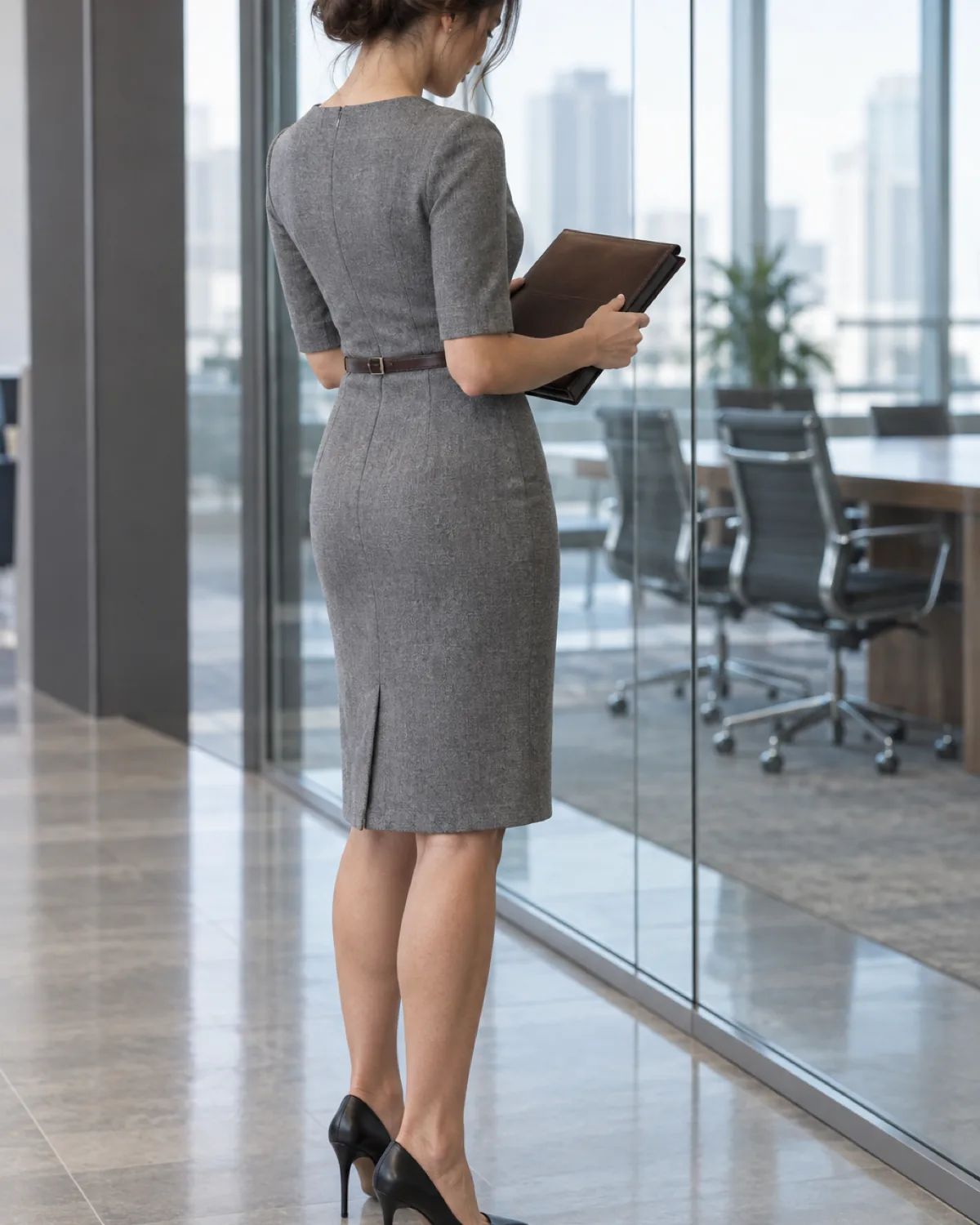
A one-piece outfit where the belt is the only accessory doing work. The belt defines the waist on a dress that might otherwise look shapeless, and grey wool reads serious without the weight of black.
- A thin belt, not a wide statement belt, so it marks the waist without becoming the focal point
- Grey wool in a mid-tone reads lighter than charcoal but still formal enough for any corporate interview
- This outfit is strongest in second-round interviews where the first impression is already made and you want to show range without dropping formality
- Keep jewellery to a watch and small earrings so the dress stays the centre of the outfit
8. Camel Trousers, Navy Blazer and a White Shirt
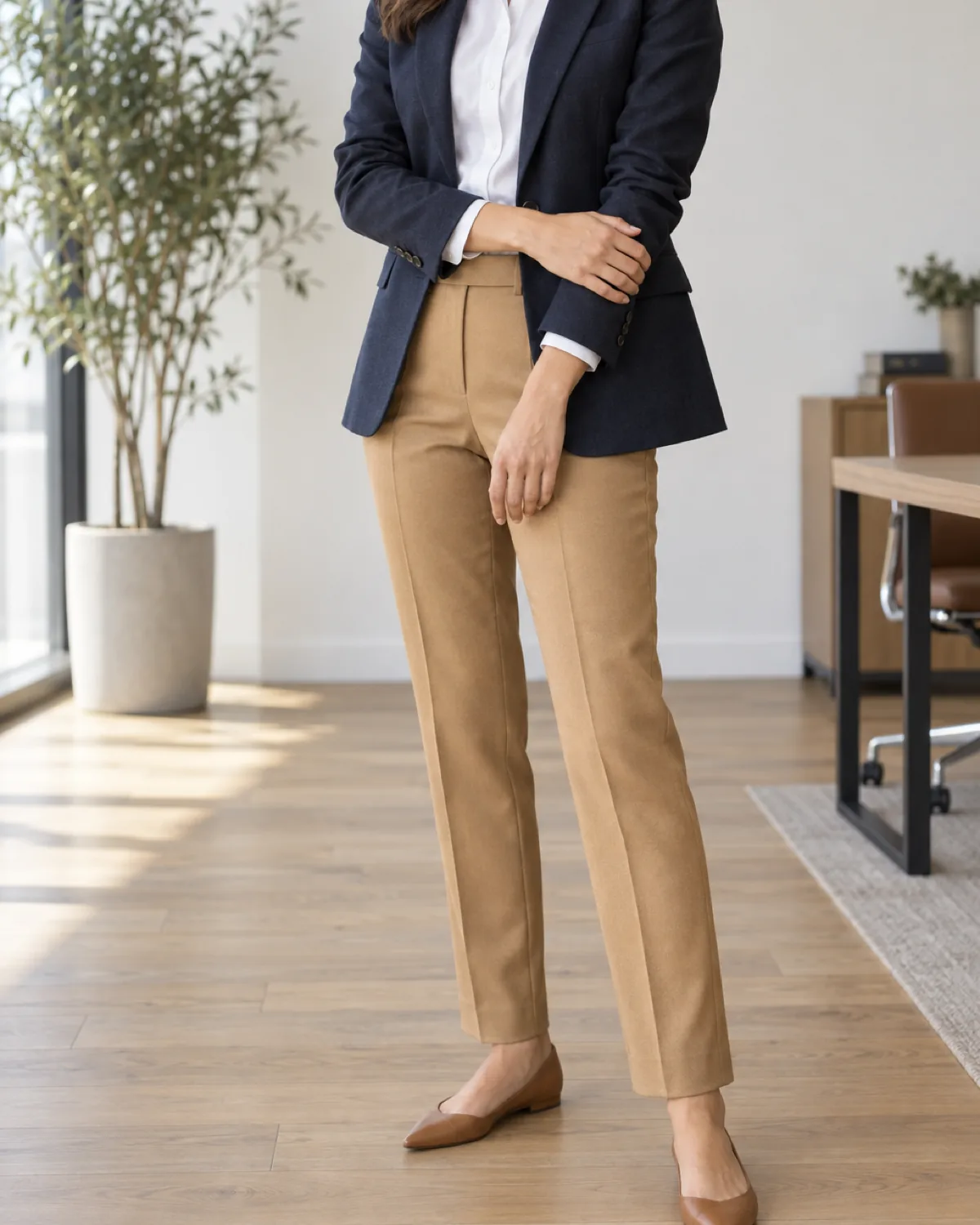
Mixed neutrals that prove the outfit was assembled, not defaulted to. Camel and navy is a combination that reads intentional in corporate settings because it requires both pieces to be right. The camel has to be warm enough to contrast the navy, not sandy enough to look like khakis.
- The trousers need a front crease and a clean waistband so they read as tailored, not as chinos
- A white shirt tucked in with the collar inside the blazer is the cleanest layering option here
- Camel is a harder neutral to get right than charcoal or navy, so check the colour against your skin tone in natural light before the interview
- This combination signals confidence because it is not the safe default and it still works within every corporate dress code
9. Midi Skirt With a Tucked Blouse and Block-Heel Pumps
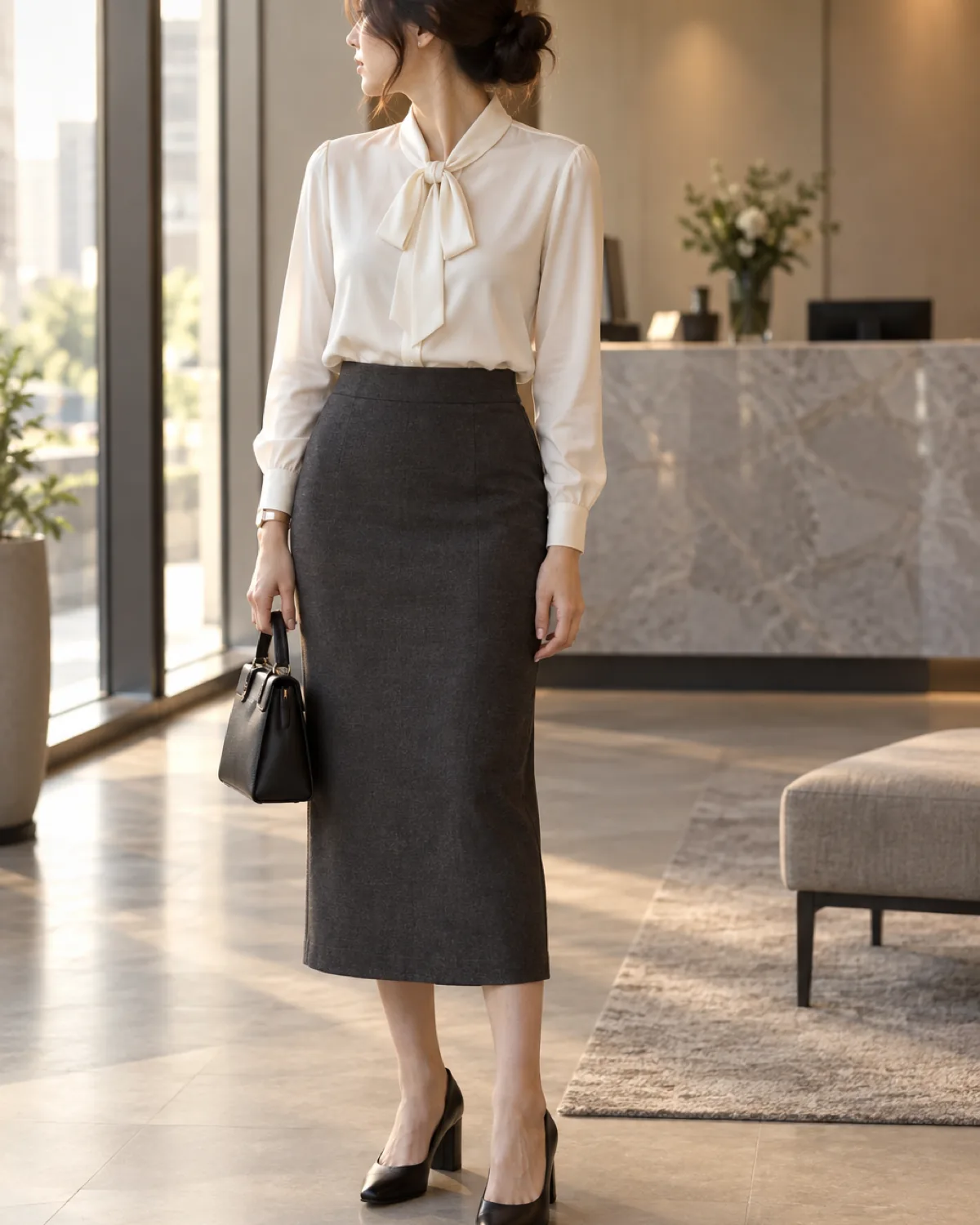
For conservative corporate settings where knee-length feels right but pencil-skirt tightness does not. A straight midi skirt that hits mid-calf with a tucked blouse balances modesty and structure. Block heels are quieter on hard floors.
- The midi length should hit at mid-calf, not at the ankle, because ankle-length reads more as a fashion choice than a professional one
- A straight silhouette rather than A-line keeps the midi from reading too casual
- The bow-collar blouse adds visual interest at the neckline without jewellery, which is useful when you are unsure how much accessorising the office culture tolerates
- Block heels rather than stilettos are practical for long corridors and marble lobby floors where thin heels echo
10. Tapered Trousers, Crew-Neck Shell and a Longline Blazer
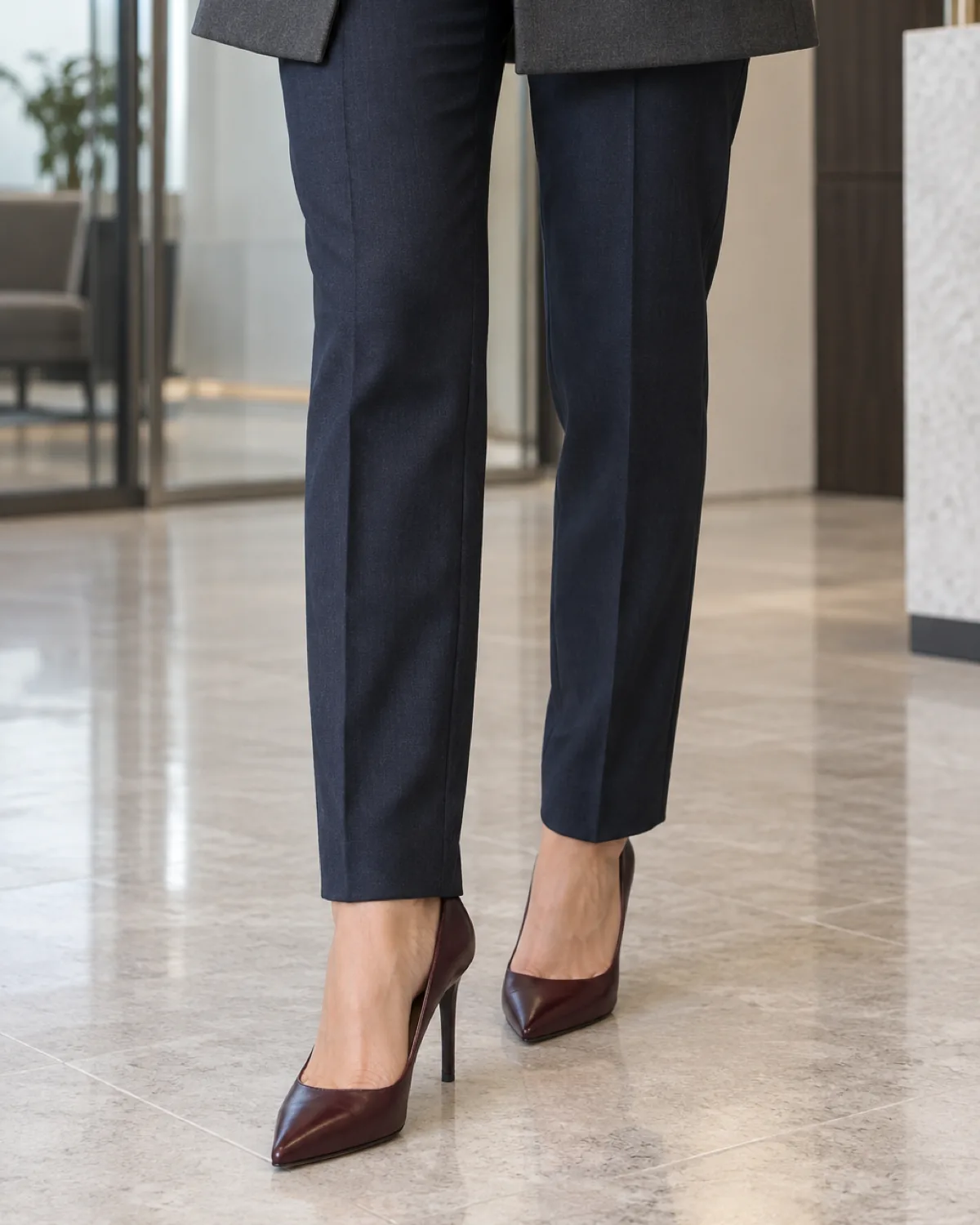
A longer blazer line that smooths the hip without needing a belt. Tapered trousers keep the leg line clean under a blazer that ends at mid-thigh. The crew-neck shell stays invisible under the blazer, which is the point.
- Tapered, not skinny: the trouser should narrow toward the ankle but still have room through the thigh
- The longline blazer should end at mid-thigh so it creates a continuous line from shoulder to hip without looking like a short coat
- A crew-neck shell in the same colour family as the trousers makes the top half disappear so the blazer does all the work
- Burgundy or dark navy pumps add a quiet colour note without disrupting the neutral palette
11. Windowpane Check Trousers With a Solid Blouse
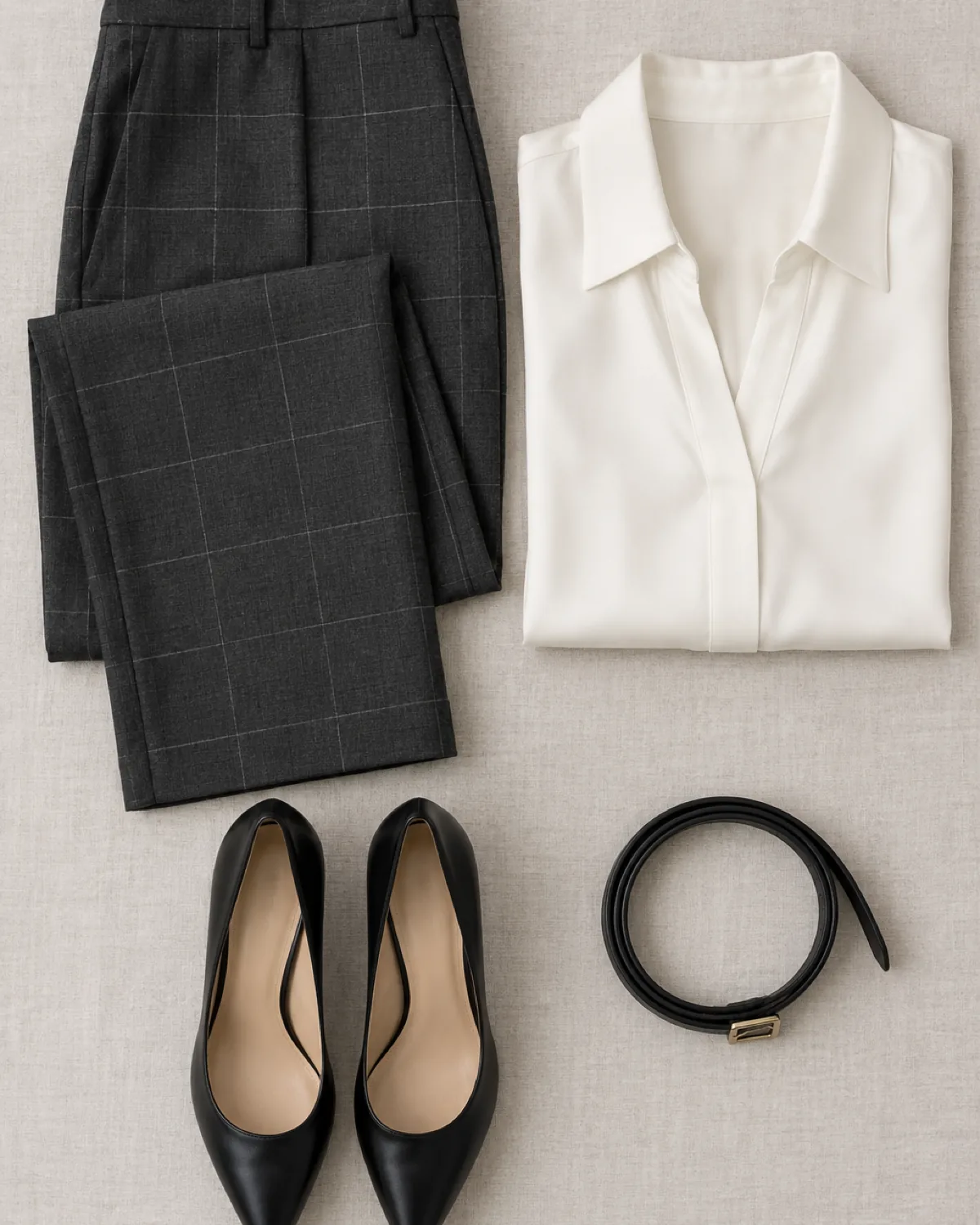
The one pattern on this list. A subtle windowpane in thin lines with wide spacing and tonal contrast only is the safest pattern in corporate interviews because it reads as texture, not as a statement.
- The check should be tonal: charcoal base with light-grey lines, not a high-contrast grid
- Pair with a solid blouse in one of the check's colours so the pattern is the only thing competing for attention
- If you can see the pattern from across the room, it is too bold for a first-round corporate interview
- This outfit works best in industries like consulting and corporate finance where subtle pattern is a known signal of seniority, not rebellion
12. Shift Dress With a Structured Cardigan
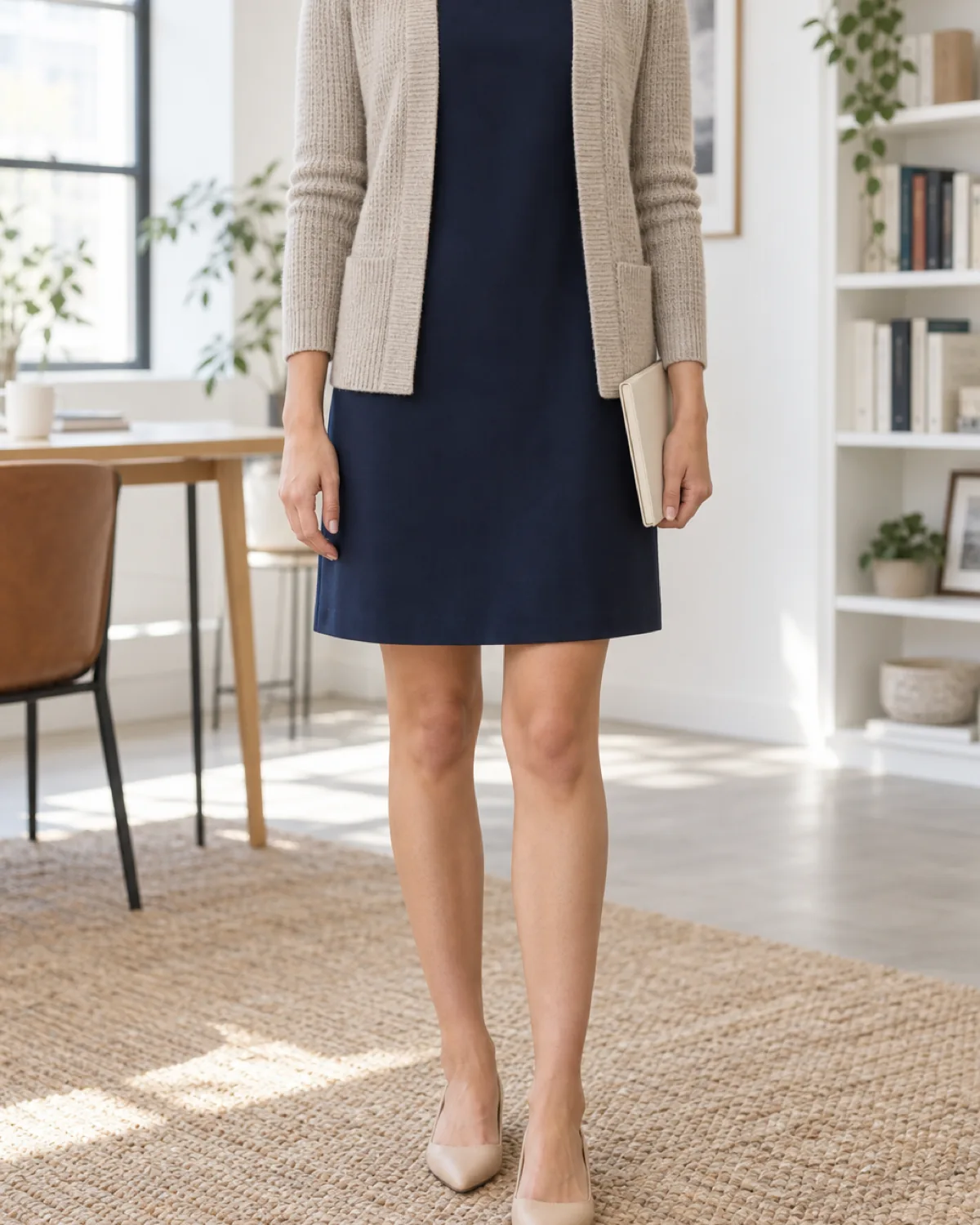
For corporate offices that lean slightly creative: media companies, brand-side marketing, architecture firms. The shift dress is less fitted than a sheath, and the structured cardigan replaces the blazer without losing the tailored line.
- The cardigan must be structured, not slouchy, so it reads as a layer with intention rather than something you grabbed because the office was cold
- A shift dress sits straighter than a sheath and does not need a belt, which keeps the outfit simpler
- Navy dress with an oatmeal or light grey cardigan is the safest contrast here
- This combination reads approachable without reading casual, which is the register most creative-corporate offices expect in an interview
13. Straight-Leg Trousers With a Tie-Neck Blouse
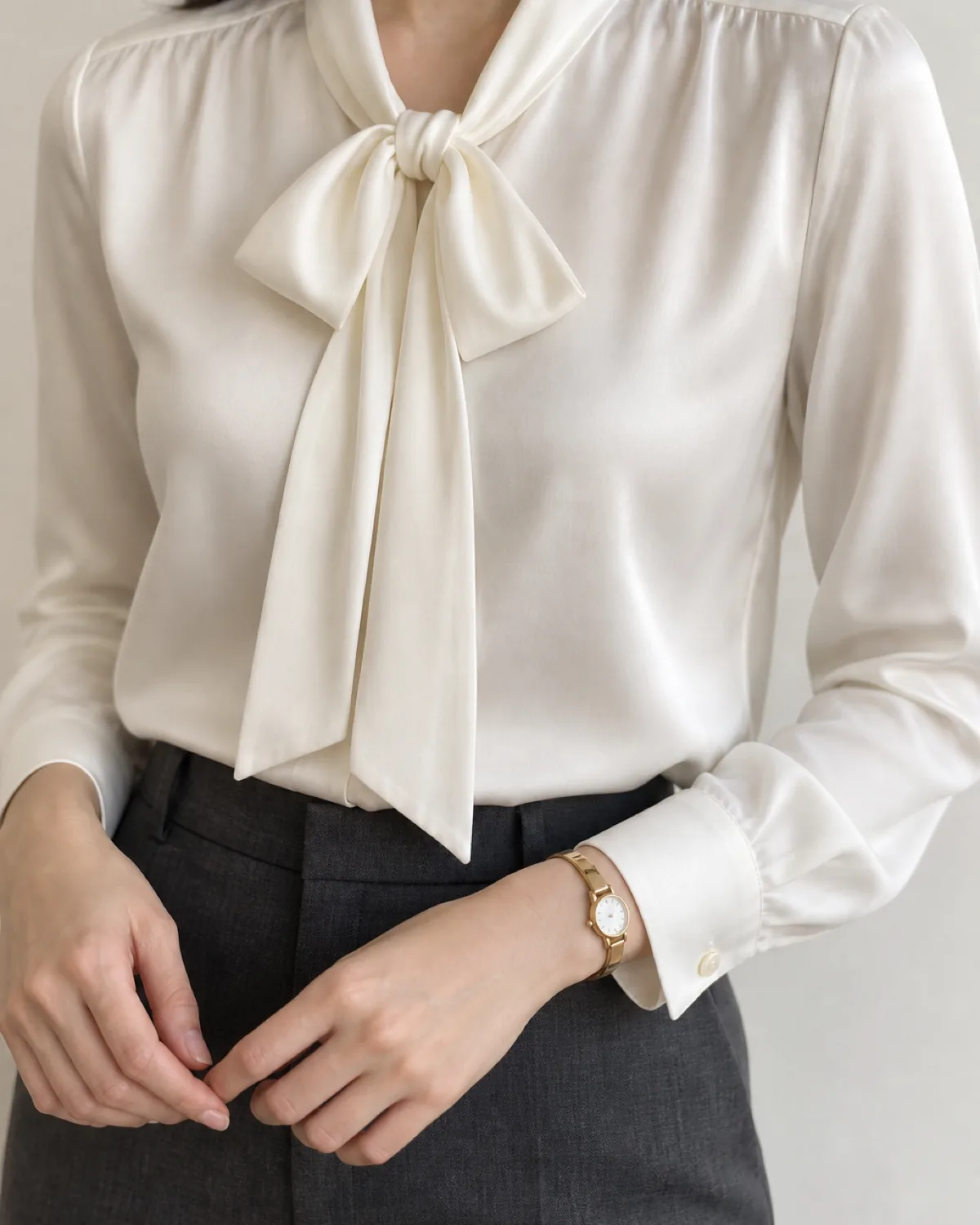
The blouse does the work here. A tie-neck adds visual interest at the collar without jewellery, which is useful when you are unsure how much accessorising the office culture tolerates. Straight-leg trousers in charcoal or navy anchor the bottom half and let the blouse carry the outfit.
- The tie should be a self-fabric bow, not a separate scarf tied at the neck, so it reads as part of the blouse rather than an accessory
- Silk or silk-blend fabric gives the tie enough drape to fall naturally instead of sticking out at angles
- A slim watch is the only jewellery this outfit needs because the tie-neck already fills the visual space that a necklace would
- Pair with a blazer over the top if the office runs very conservative because the tie-neck on its own can read slightly less formal than a collared shirt
14. Collarless Blazer Over a Column Dress
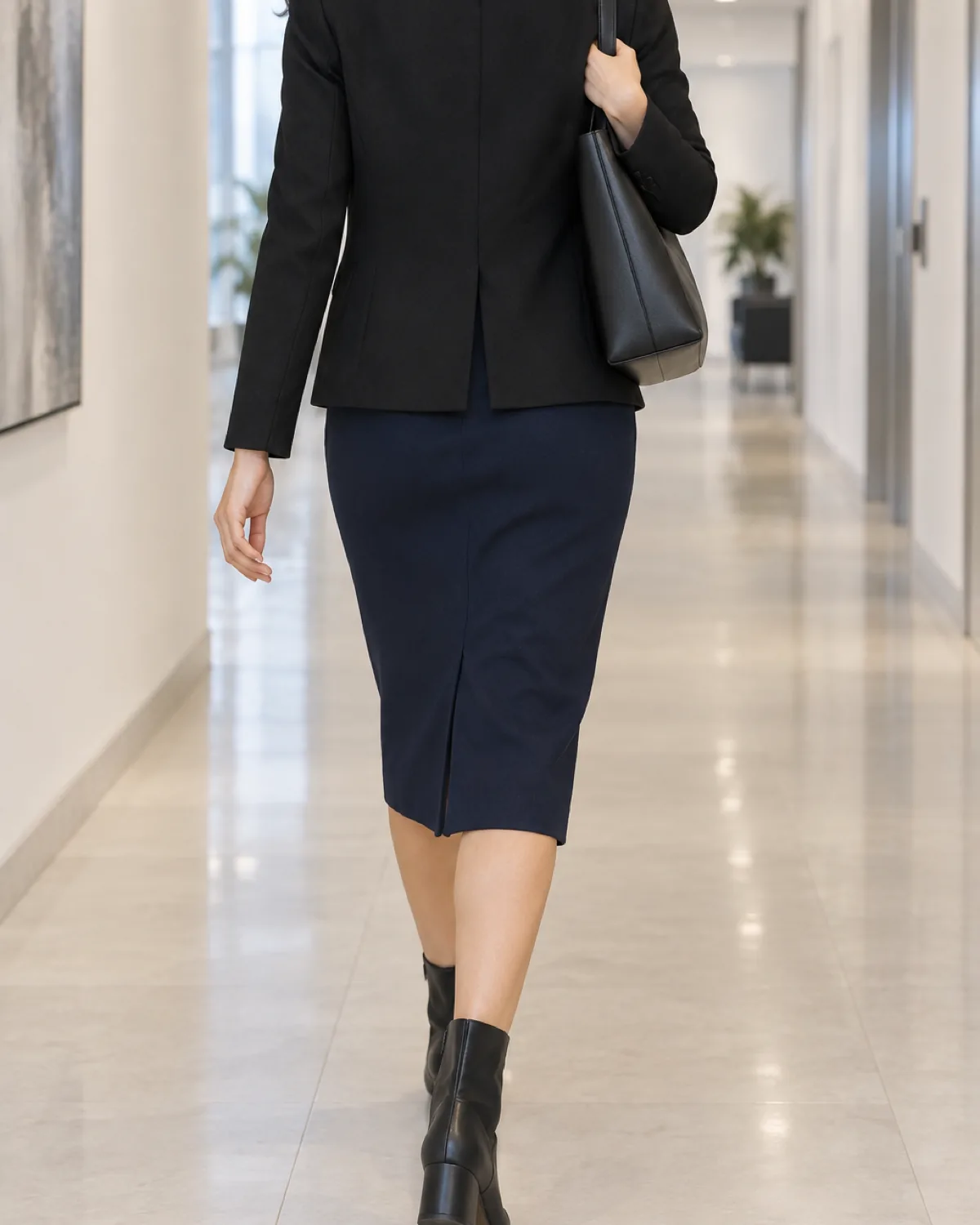
A modern alternative to the matched suit. The collarless blazer has a cleaner neckline that works without a blouse collar underneath, and the column dress provides one continuous line from shoulder to knee. This combination reads contemporary-corporate rather than traditional-corporate.
- The collarless blazer should have clean, finished edges at the front opening, not raw or unstructured
- A column dress in a complementary dark neutral like navy under a black blazer creates depth without pattern
- Ankle boots with a low block heel work here because the collarless blazer already signals a slightly modern register
- This outfit is best suited for corporate environments that have moved past the matched-suit expectation but still hold a business professional standard
For a wider range of dress codes, start with the general interview guide. For warm-weather interviews, summer interview outfits handle heat without dropping formality. And if you land the job, the first day guide picks up where this leaves off.
Where the dress-code definitions come from
- What Should Dress Codes Look Like in the Modern Workplace? — Society for Human Resource Management
- How To Dress for a Job Interview — Indeed Career Guide
- Professional Dress — Yale Office of Career Strategy
- What to Wear — Harvard Office of Career Services
Keep this one
Save it where you plan outfits
Pin the image above to the board you actually check on a Sunday night. This guide is written to be re-read, not read once.
Tonight, before you close this tab
- Check whether your interview suit still fits by sitting down in it tonight and looking at the trouser break and the jacket shoulder
- Lay out the full outfit including shoes, bag and any jewellery the night before so there are zero morning decisions
- Google the company's leadership page and look at what the senior women are wearing in their headshots
- Remove any visible branding from your bag and shoes, or swap them for unbranded alternatives
- Try the commute outfit if you plan to change at the office, and confirm you have somewhere to store the change