8 Business Casual Outfits That Show What the Dress Code Actually Means
Business casual for women, defined and then shown. Eight office outfits, each demonstrating a rule from published dress code guidance rather than a styling opinion.
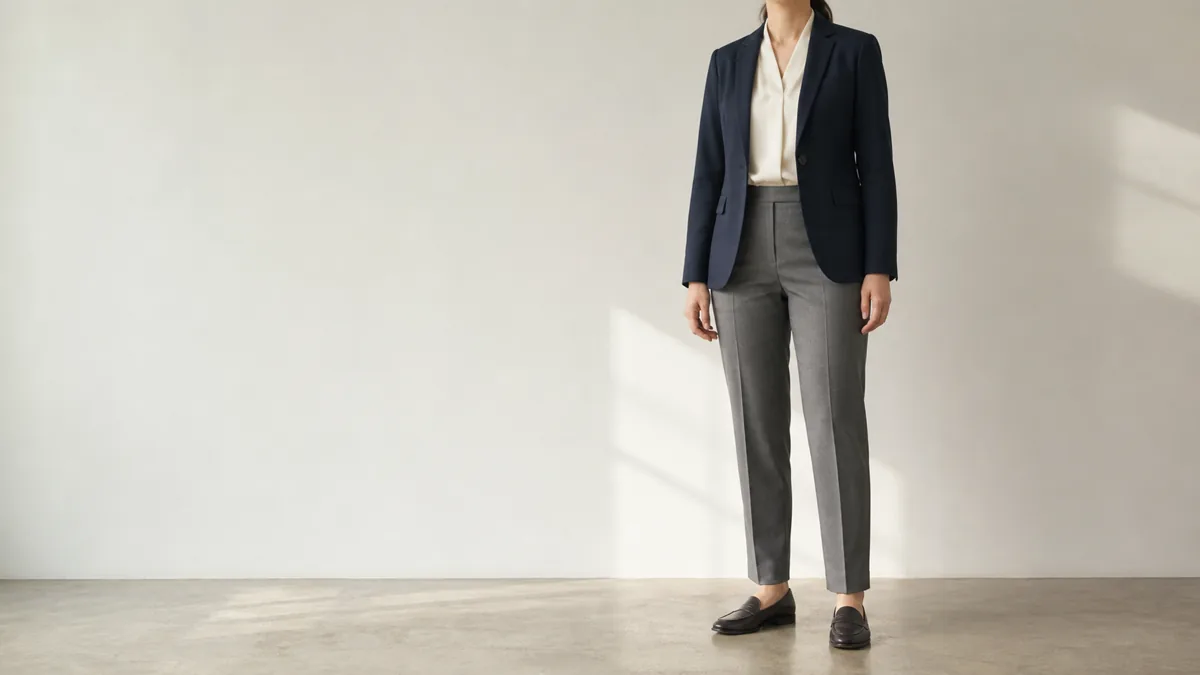
Working out an outfit for tomorrow? Save this page. It is easier to skim the night before than to remember.
At a glance
Works
- A blazer worn open over a soft blouse, with matched-weight trousers
- A fine knit with its own shoulder line, no jacket needed
- Knee-length skirts, checked seated as well as standing
- A belted shirtdress at midi length
Depends
- Dark straight-leg denim, and only where your own office already wears it
- Minimal leather sneakers; contested by office, not by rule
- A low block heel; the sources disagree, so decide by how long you stand
Skip
- Athletic sneakers, which sit outside the code in nearly every source
- Anything pilled, stretched or trailing lint, whatever the label says
- A skirt that turns short once you sit down
Business casual is the most used and least defined phrase in office dressing. Guidance calls it less formal than business wear but still professional, which is true and still leaves you facing a closet.
So these eight outfits are not a mood board. Each demonstrates one rule, and the rules come from published dress code guidance rather than from taste.
Borrow one test first. Creighton's career centre puts business casual as clothing that should look right even for a chance meeting with a CEO.
1. A blazer over a blouse, and why it still anchors everything
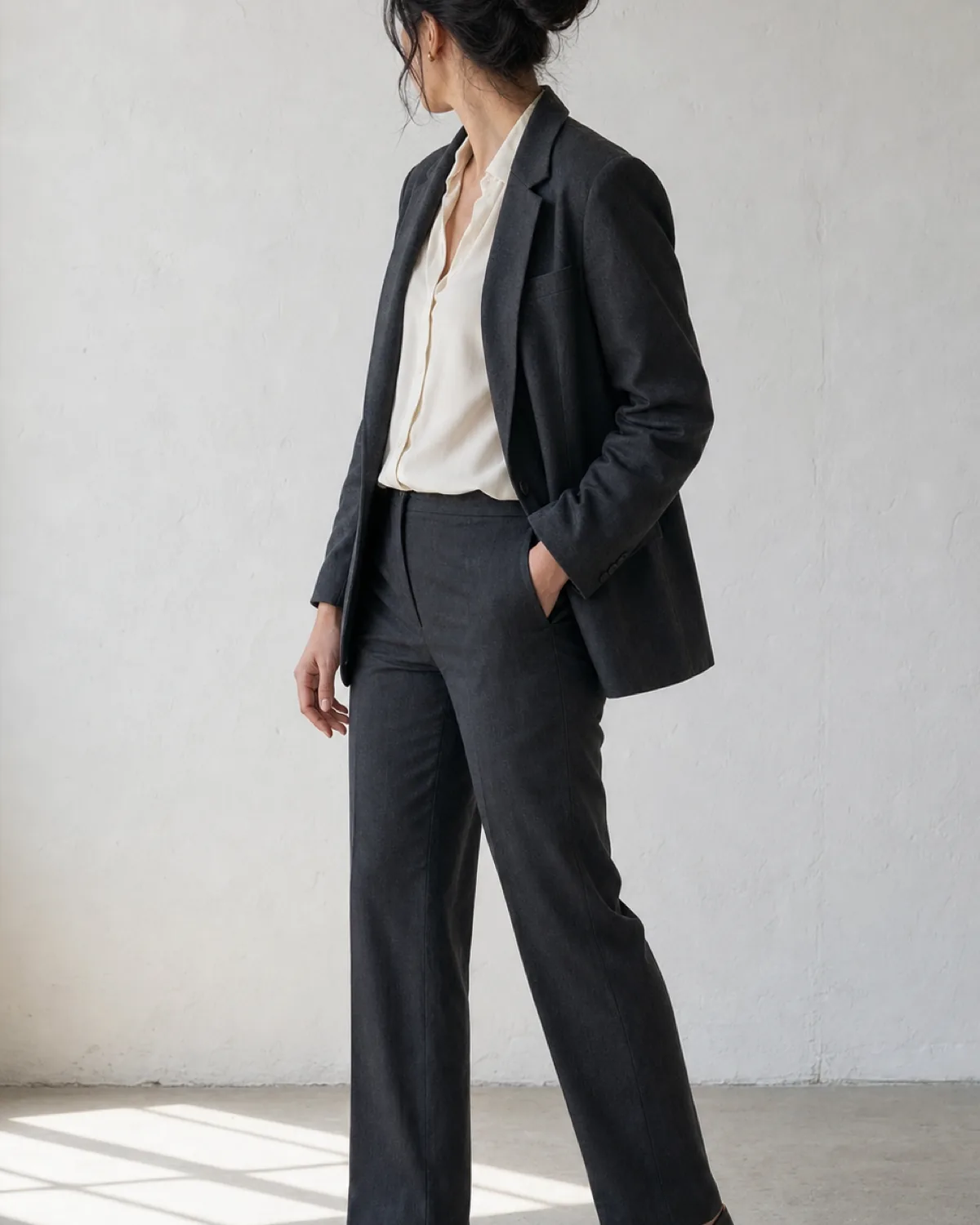
The University of Florida's career centre describes business casual as almost literally removing some of the elements of business professional. Read it that way and the blazer stops being decoration. It is the last structured piece left after the matched suit is gone, which is why an outfit built around one almost never reads as too casual.
Worn open over a soft blouse, it also solves the problem career guidance keeps flagging: business casual for women tends to sit very close to business professional, so the margin for error is narrow.
- Keep the jacket unbuttoned so the line stays soft rather than formal
- Match the trouser to the jacket in weight, not in colour
- One small earring is enough; accessories are meant to be simple and not distracting
- Check the shoulder seam sits on your shoulder before you check anything else
2. Trousers and a fine knit, for the day the jacket comes off
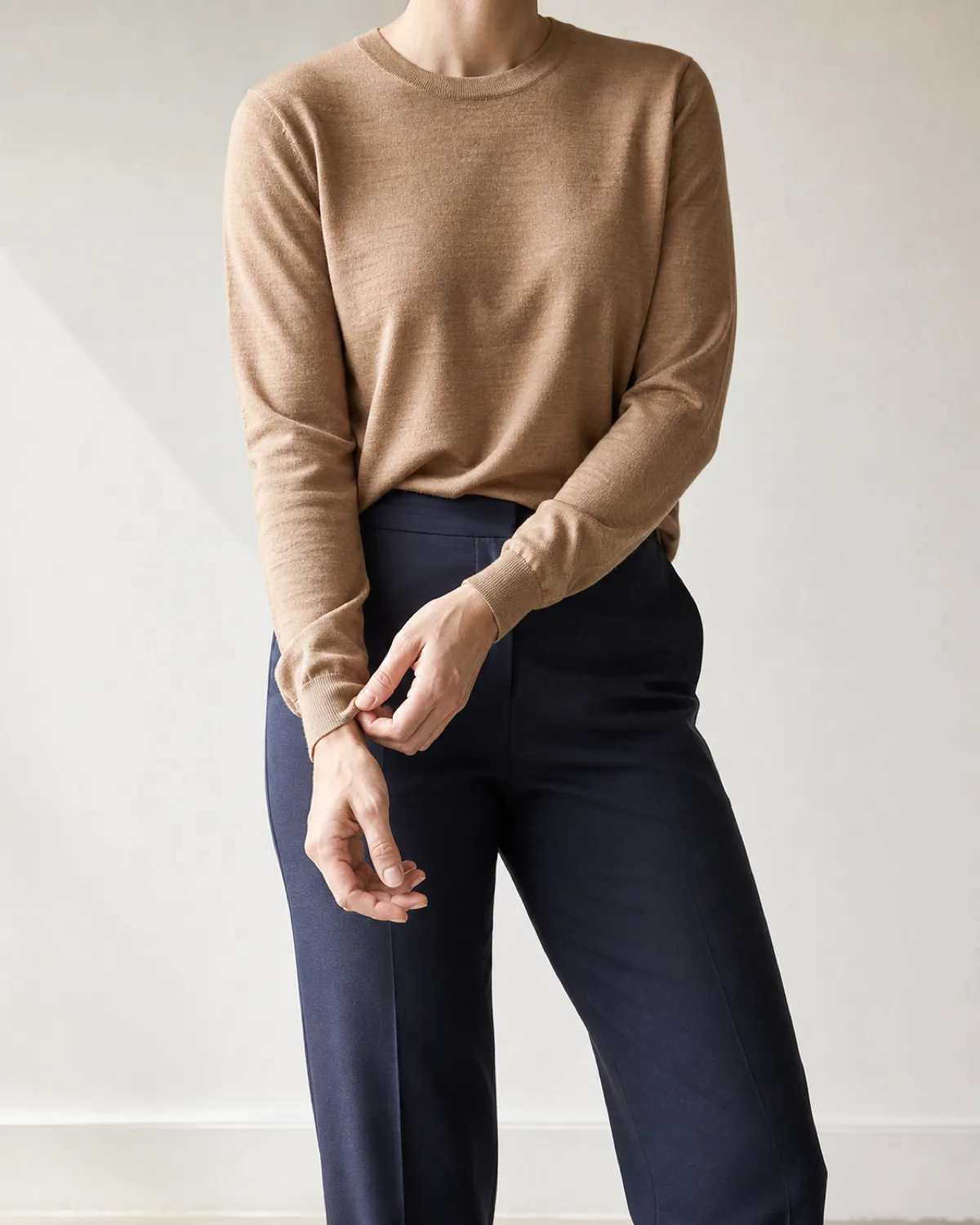
Take the jacket away and most outfits fall apart, because people hear business casual as permission to relax the whole thing. It is not. What relaxes is the structure, not the standard.
A fine knit in a good fibre keeps its own shoulder line, so it carries a tailored trouser without a jacket. Left untucked, as it is here, it reads calmer than a shirt would. What kills this outfit is never the shape. It is a pilled surface, a stretched cuff, or a tag still hanging off the neckline.
- Choose a knit fine enough to show the shoulder seam
- Untucked works when the hem sits at or just below the waistband
- Lint roll it; career guidance names lint and loose threads specifically
- Fold rather than hang, so the shoulders keep their line
Where to start
Find your situation, skip ahead
Your office has a written dress code
Read it before this page; it outranks every outfit here. Then use these as templates inside its lines.
01 A blazer over a blouse, and why it still anchors everything03 A knee-length skirt with the shirt tucked in
No written code, and you cannot tell yet
Err formal until you can. The blazer outfit is the safest opener, and the shoe line is your fastest adjustment.
01 A blazer over a blouse, and why it still anchors everything08 The shoe line decides how the whole outfit reads
You own the basics and keep wearing the same two outfits
Rotate the third piece instead of buying new: the shirtdress and the wide leg read different without new risk.
04 The shirtdress, belted05 Wide-leg trousers with a loafer06 A cardigan doing the blazer's job
3. A knee-length skirt with the shirt tucked in
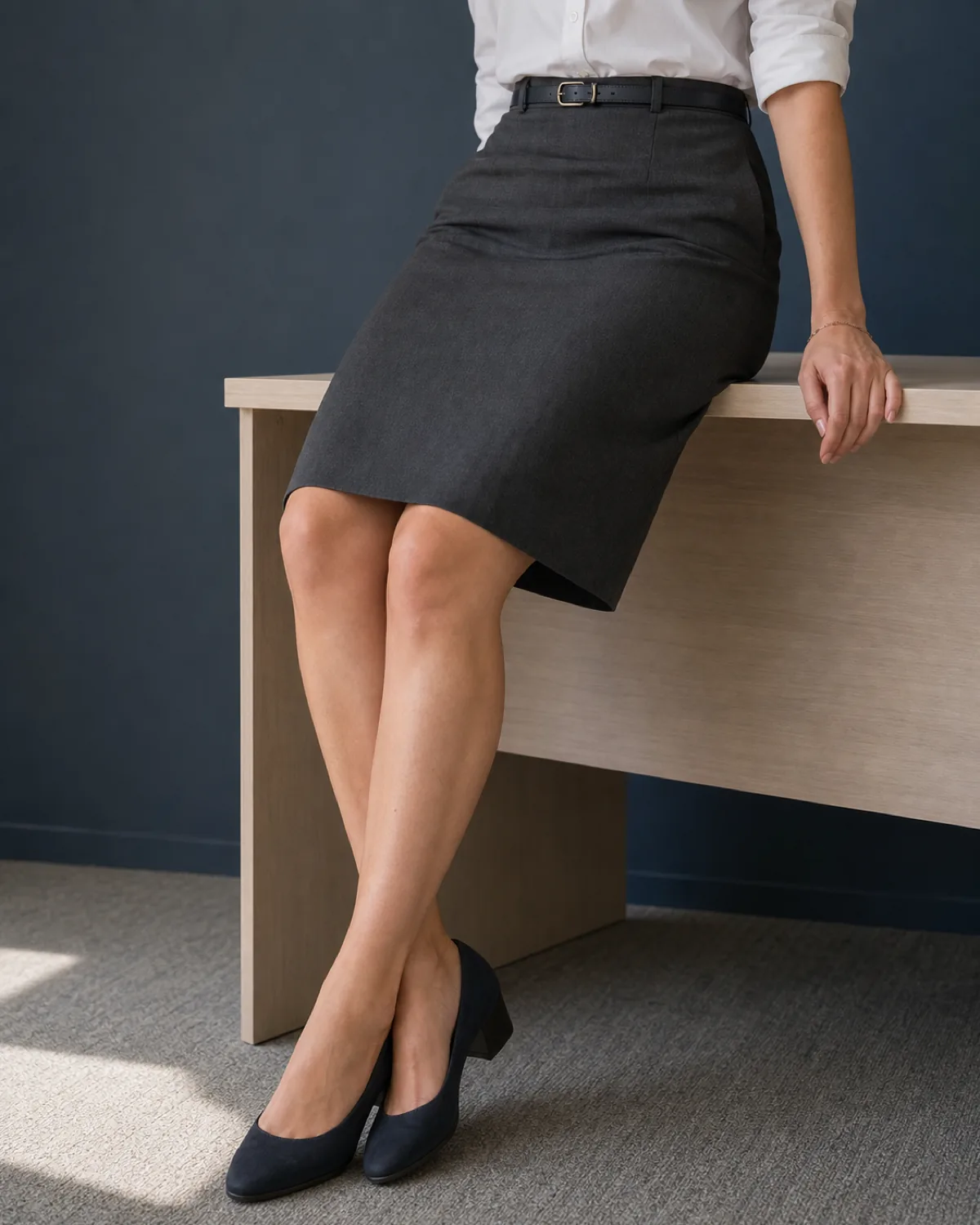
Hem length is one of the few places where guidance is specific rather than suggestive. Knee-length skirts are named directly as business casual, which makes this the least ambiguous bottom half you can own.
The tuck is doing quiet work here. It puts a horizontal line at the waist, which is what stops a plain shirt and skirt from reading as a uniform. Sit down in it before you decide. A skirt that is knee-length standing and much shorter seated is a different garment at your desk than it was in the mirror.
- Knee-length means at the knee, checked seated as well as standing
- A thin belt marks the waist without adding bulk under a jacket
- Wear-test the seated hem before the day you need it
- Keep the shirt crisp; softness here reads as unmade rather than relaxed
4. The shirtdress, belted
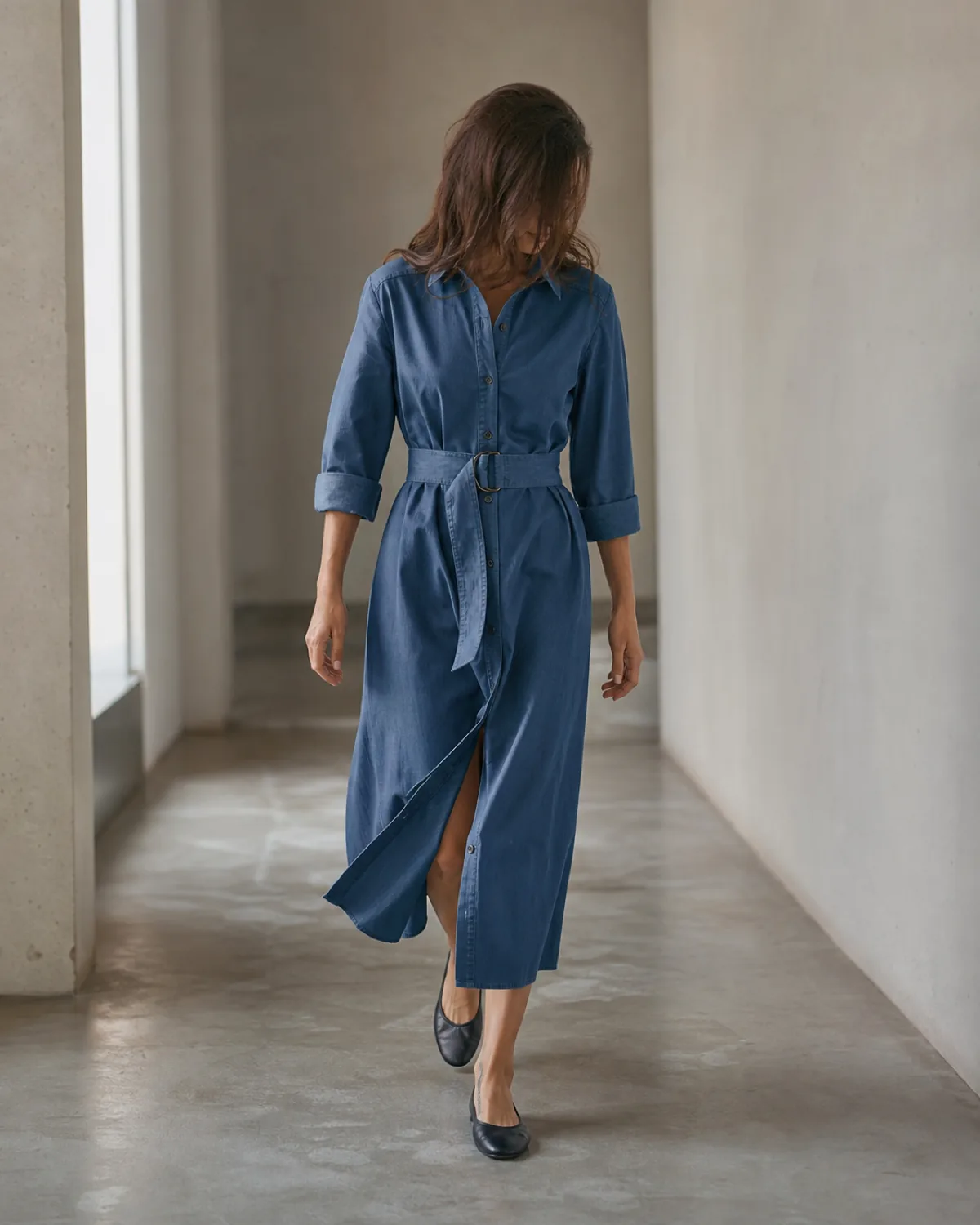
A dress is listed among the standard business casual options, and it is the fastest of them, because there is only one decision to make instead of three. The belt is what turns it from a garment into an outfit.
Midi length, as here, is a safe read in almost any office, and a cotton or chambray weave keeps it from tipping into evening. The one thing to watch is the button placket: a shirtdress that gaps when you sit is doing the opposite of crisp and neat.
- Belt it at the natural waist rather than at the hip
- Check the placket seated, arms forward, before you commit to it
- Flat shoes are enough; the dress is already carrying the outfit
- Add a blazer on top when the day includes anyone external
5. Wide-leg trousers with a loafer
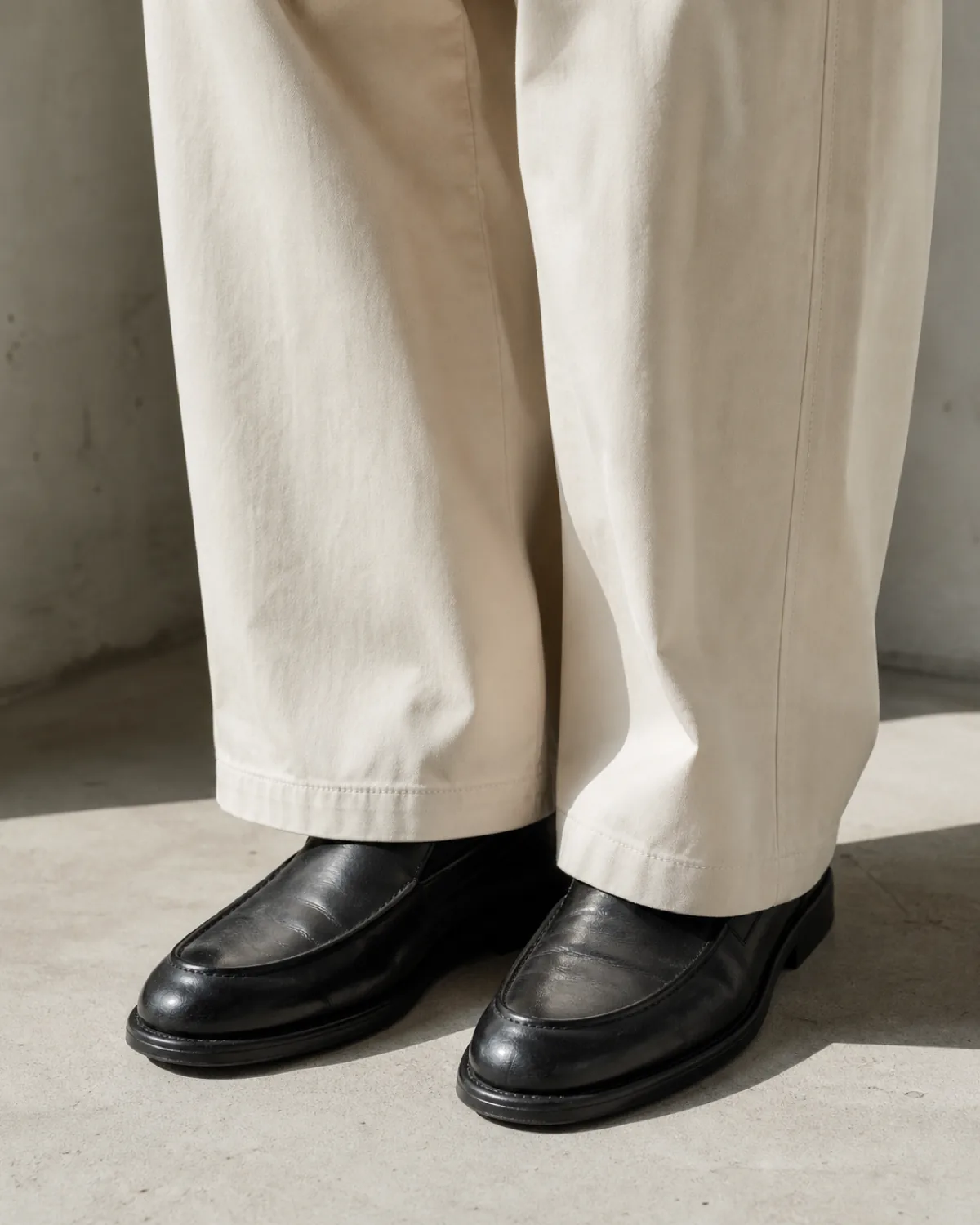
Business casual is not frozen in 2005. Career guidance has explicitly folded flowing wide-leg trousers and lighter fabrics into what counts, which is worth knowing if you have been avoiding them on the assumption that only a slim trouser is safe.
The whole outfit lives at the hem. Wide legs need a shoe with visible structure under them, and they need to break just above it rather than pooling on the floor. Get that break right and the volume reads as deliberate. Get it wrong and it reads as the wrong size.
- Have them shortened to break just above the shoe
- Pair with a shoe that has a defined toe and sole
- Keep the top half close to the body to balance the volume
- Choose a fabric with weight, so the leg hangs instead of flapping
6. A cardigan doing the blazer's job
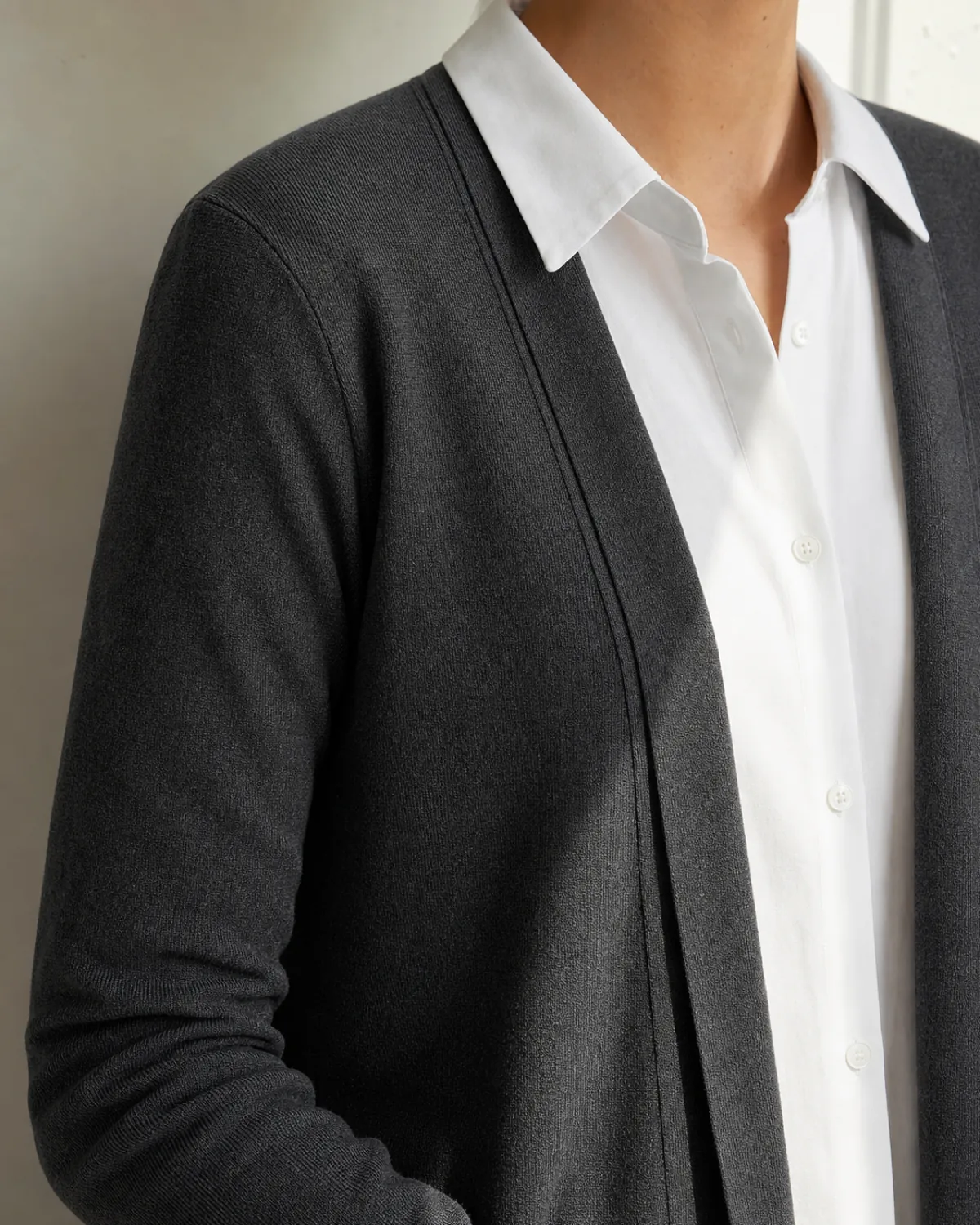
Cardigans are named in career guidance as an acceptable business casual top, which surprises people who file them under cosy. The distinction is structure. A longline cardigan in a fine knit holds a clean vertical line down the front, and that line is most of what a blazer was providing.
What it cannot survive is looking tired. The same guidance that lets the cardigan in also rules out missing buttons, visible lint and tight or baggy fits. A slouchy cardigan over a crisp shirt is not a softer version of this outfit. It is a different, worse one.
- Choose longline over cropped so the vertical line runs uninterrupted
- Keep a collared shirt underneath to hold the neckline
- Replace it once the cuffs stretch out
- Steam the collar; the shirt is doing the crispness for both pieces
7. Dark denim, which genuinely depends on where you work
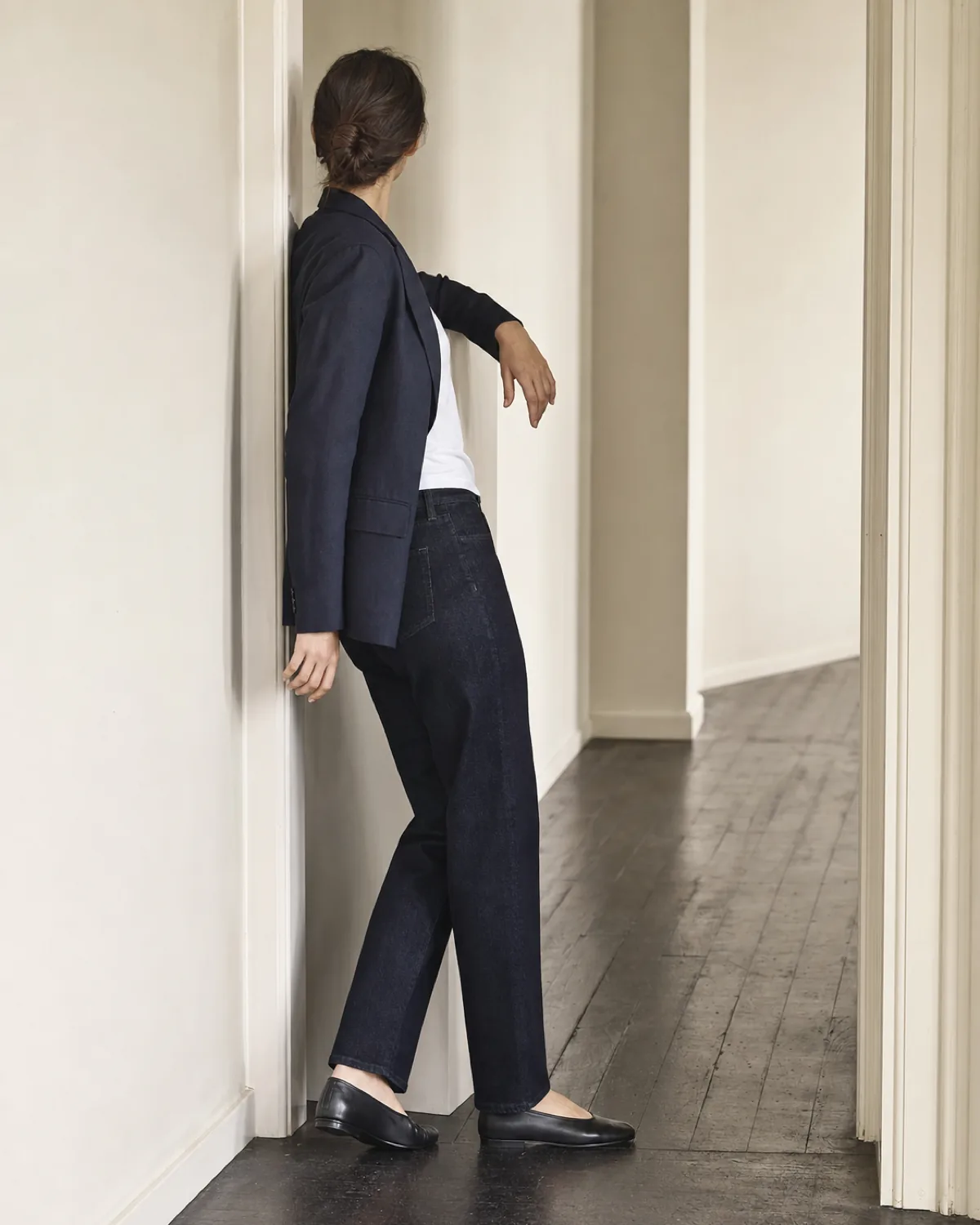
This is the one place where an honest guide has to stop giving a single answer. Career guidance is direct about it: business casual looks different depending on the workplace, and jeans that are ordinary at a relaxed startup may not be at an office where clients visit regularly.
So the outfit above is built to survive the widest range of offices, with the darkest possible indigo, no fading, no distressing, a straight leg and a blazer over the top. That is as far as styling can take you. The rest is information about your own workplace.
- Read the written dress code first; it outranks anything on this page
- Look at photographs on your employer's site and social accounts
- Watch what people two levels above you wear on ordinary days
- When you cannot tell, err formal; that is the standing advice in every source here
8. The shoe line decides how the whole outfit reads
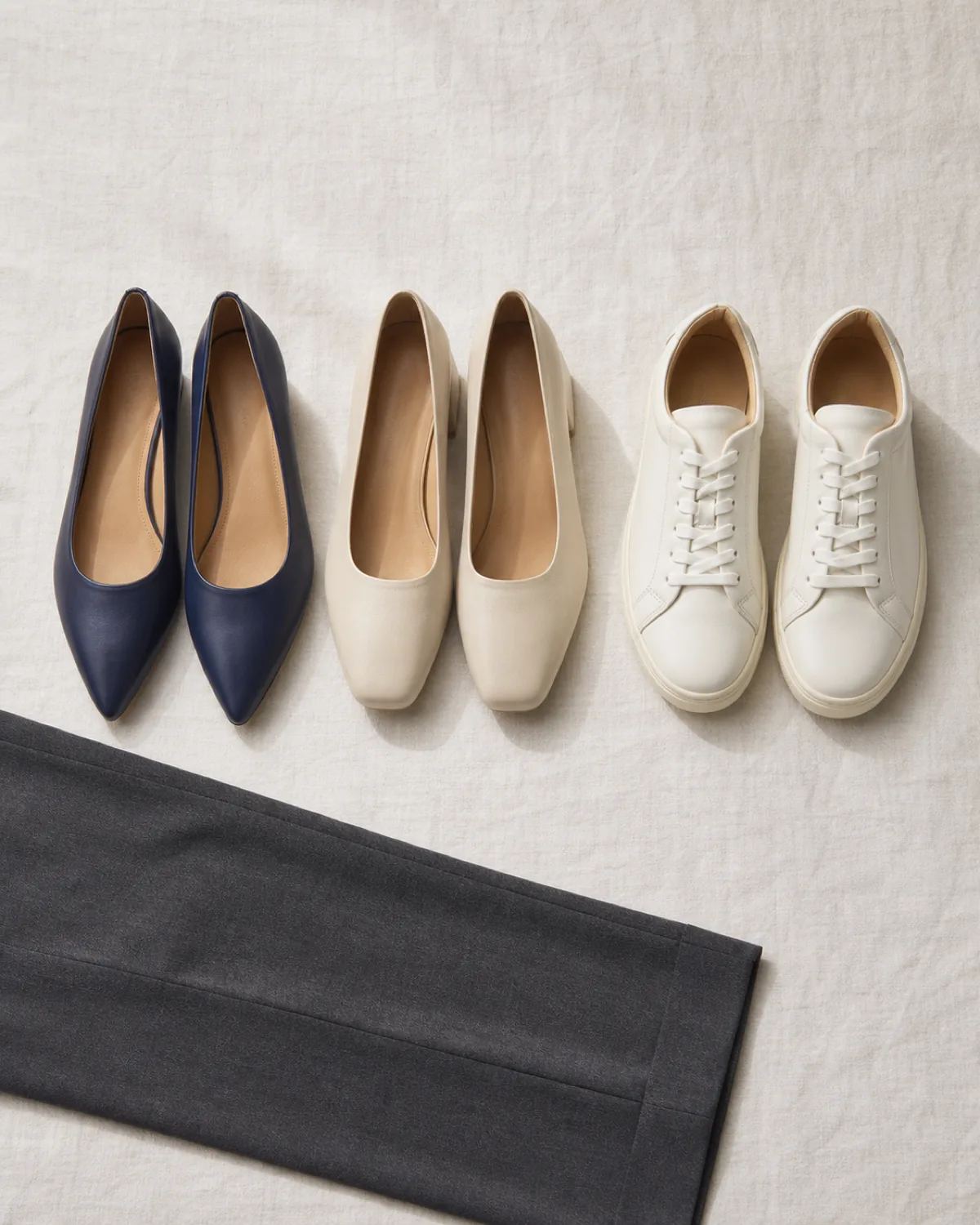
Change nothing above the ankle and swap the shoes, and the same trousers and knit move a full step in either direction. That makes shoes the cheapest correction available to you on a morning when an outfit reads slightly wrong.
Guidance is consistent that shoes should be clean and polished, ideally leather or another dress style such as a loafer or a flat, and that athletic sneakers generally sit outside the code. The minimal leather sneaker on the right is the one genuinely contested item here, and it is contested by office, not by rule.
Heels are where the published guidance disagrees with itself, so it is worth naming rather than smoothing over. Creighton's guide tells students not to wear heels at all, written for long hours on your feet at career events.
The other guidance here does not exclude a low heel, and treats a court shoe as ordinary business casual. Both positions are defensible. Which one applies depends on how much of your day is spent standing.
- Keep them clean and polished; that instruction appears in the guidance itself
- A pointed flat reads as formal as a low heel and survives a commute better
- Save the sneaker for offices where you have seen someone senior wear one
- Replace worn heel tips before you replace the shoes
Everything above is a way of turning one vague phrase into decisions you can make the night before rather than at seven in the morning. Read your own dress code first, use the chance-meeting test when there is not one, and treat the shoes as the last adjustment rather than the first.
Where the dress-code definitions come from
- So What Exactly Is Business Casual? — UF Career Connections Center, University of Florida
- What Does Business Casual Really Mean in 2023? — Academic Success & Career Center, Washington State University
- Business Casual Attire — Creighton University Career Center
Keep this one
Save it where you plan outfits
Pin the image above to the board you actually check on a Sunday night. This guide is written to be re-read, not read once.
Tonight, before you close this tab
- Steam or lint-roll tomorrow's knit and check it for pilling
- Sit down in the skirt you plan to wear and watch the hem
- Wipe tomorrow's shoes and look at the heel tips while you are down there
- Try the blazer over the exact blouse you plan, not a stand-in